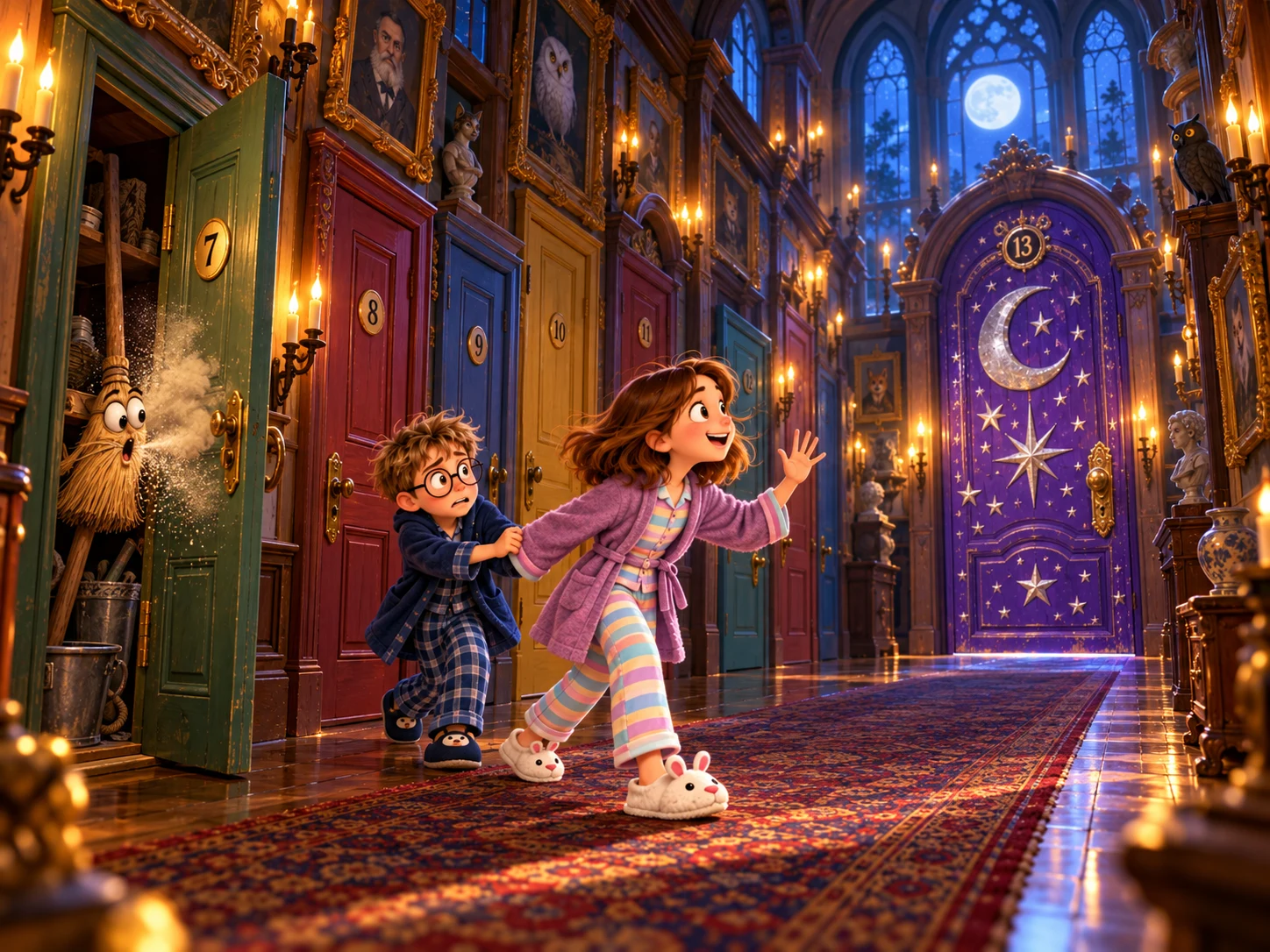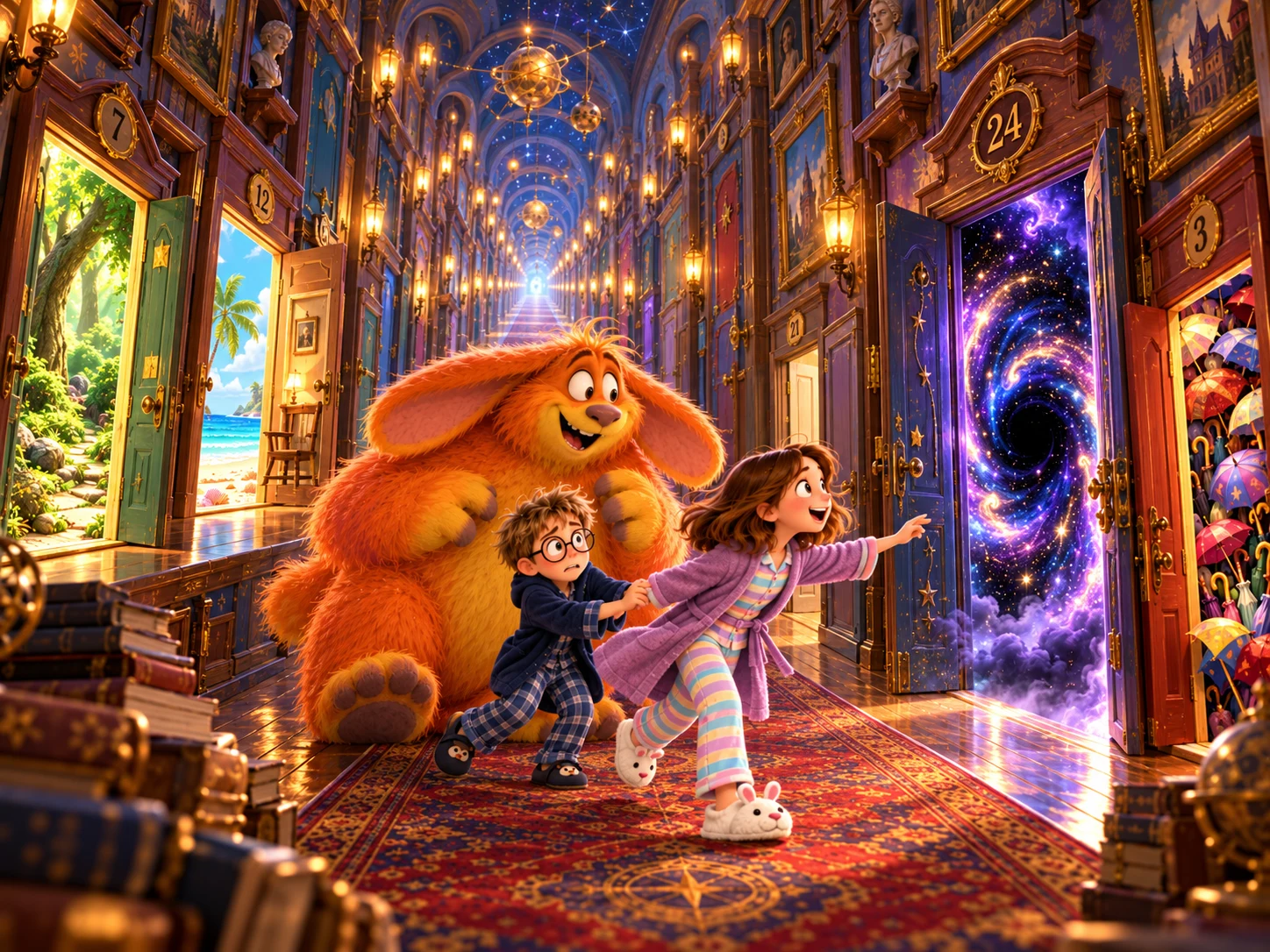
Mary claimed she had found forty-two, although Bob pointed out that Mary had counted the pantry door six times because she kept going back for biscuits.
The house was enormous, old and slightly crooked.
It had three floors, two staircases, four chimneys, one attic, a cellar nobody liked going into, and more corridors than any sensible house could possibly need.
There were doors at the ends of corridors. Doors underneath stairs. Doors inside cupboards.
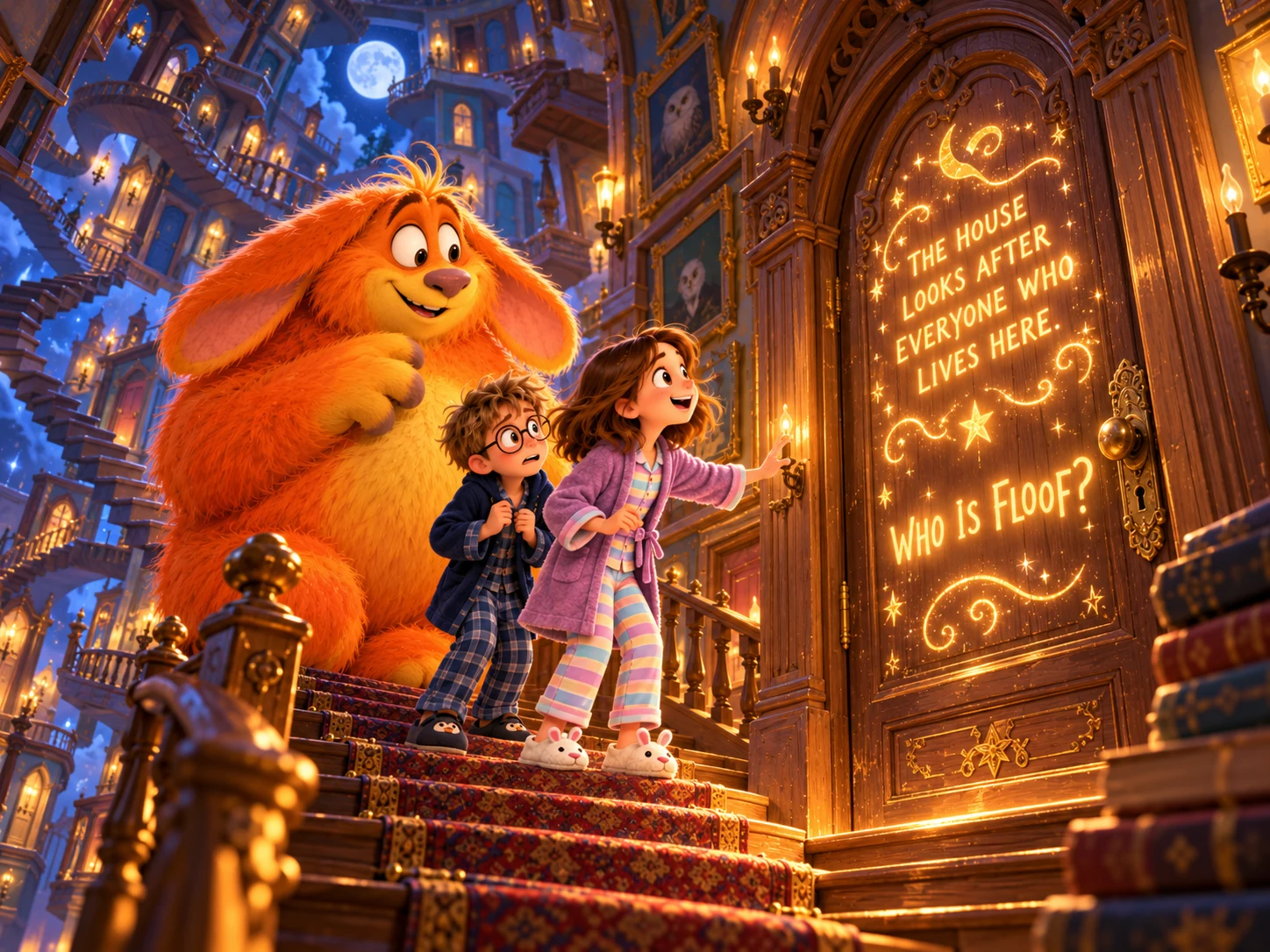
There was even a little red door halfway up the main staircase.
Nobody knew where that one went.
Dad said it probably contained pipes. Mary thought it led to buried treasure. Bob thought it contained spiders.
Bob usually thought things contained spiders.
The strangest thing about the house, though, was that sometimes there seemed to be more doors than there had been the day before.
Mum blamed the renovations that previous owners had made over the last hundred years. Dad blamed bad memory. Mary blamed magic.
Bob preferred not to blame anything at all.
Blaming things often led to investigating them. And investigating things was exactly the sort of thing Mary liked doing.
Bob preferred toast. Toast was predictable.
One night, after dinner, their father came upstairs to say goodnight.
Rain tapped softly against the windows and the wind moved through the trees outside. The old house creaked and sighed.
“Is the house going to fall down?” Bob asked.
Dad laughed.
“This house has been standing for nearly two hundred years.”
“That doesn't answer the question,” said Bob.
Dad tucked the blankets around him.
“The funny thing about old houses,” he said, “is that after enough people have lived in them, they start to feel alive.”
Mary sat up in her bed.
“Alive?”
“In a way,” Dad said. “They remember footsteps. Voices. Laughter. Arguments. Birthdays. Christmas mornings.”
Bob frowned.
“Do they remember people dropping jam on the carpet?”
“I expect they remember that very well.”
“That was Mary.”
“It was raspberry,” Mary said proudly.
Dad smiled.
“My grandfather used to say this house looked after everyone who lived here.”
Bob glanced at the ceiling.
“How?”
Dad shrugged.
“Maybe it keeps the rain out when you're cold. Maybe it creaks when someone is walking downstairs. Maybe sometimes it helps you find something you've lost.”
Mary's eyes widened.
“Does it have secret passages?”
“I didn't say that.”
“You didn't say it didn't.”
Dad laughed.
“Goodnight, explorers.”
“Goodnight, Dad.”
He turned off the light and closed the door.
A few minutes later, everything became quiet.
Almost.
Because old houses are never completely quiet.
They click. They knock. They creak. They groan.
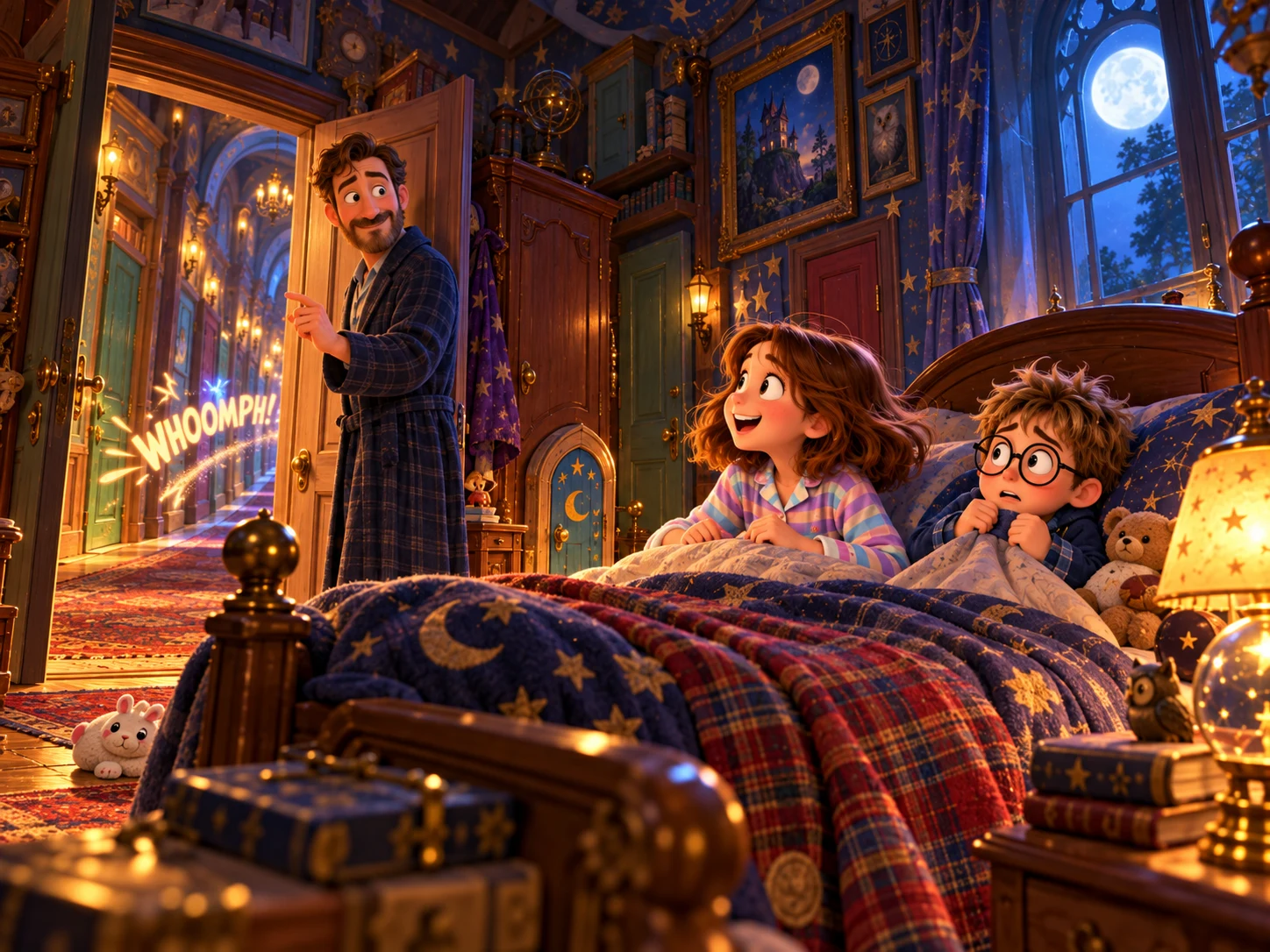
And occasionally they make a noise like—
WHOOMPH!
Mary sat upright. Bob disappeared underneath his blanket.
For several seconds neither of them moved.
Then Mary whispered, “Did you hear that?”
“No.”
“You did.”
“I've decided I didn't.”
There came another sound.
Scrrrrrape.
Mary climbed out of bed.
Bob's head appeared above the blanket.
“Where are you going?”
“To investigate.”
“Of course you are.”
Mary pulled on her dressing gown.
Bob groaned.
“Dad said the house looks after us.”
“Exactly.”
“That doesn't mean we should wander around it in the middle of the night!”
Mary opened the bedroom door.
The corridor outside was dark. Moonlight came through a tall window at the far end.
“Come on,” she whispered.
Bob did not move.
Mary smiled.
“I'll go by myself.”
Bob immediately got out of bed.
This was one of Mary's most successful tricks.
“I am only coming,” Bob whispered, “to stop you doing something ridiculous.”
“Good.”
“How are we going to know where we've been?”
Mary thought for a moment.
“We count the doors.”
Bob stared at her.
“That is a terrible idea.”
“Why?”
“Because this house has too many doors.”
“Exactly.”
And that was the start of the problems.